What is on top of the house
Roof materials around Harrison, in plain words
Pitched roofs and flat roofs wear differently and leak in different places. Here is what the federal and park-service pages say about each covering.
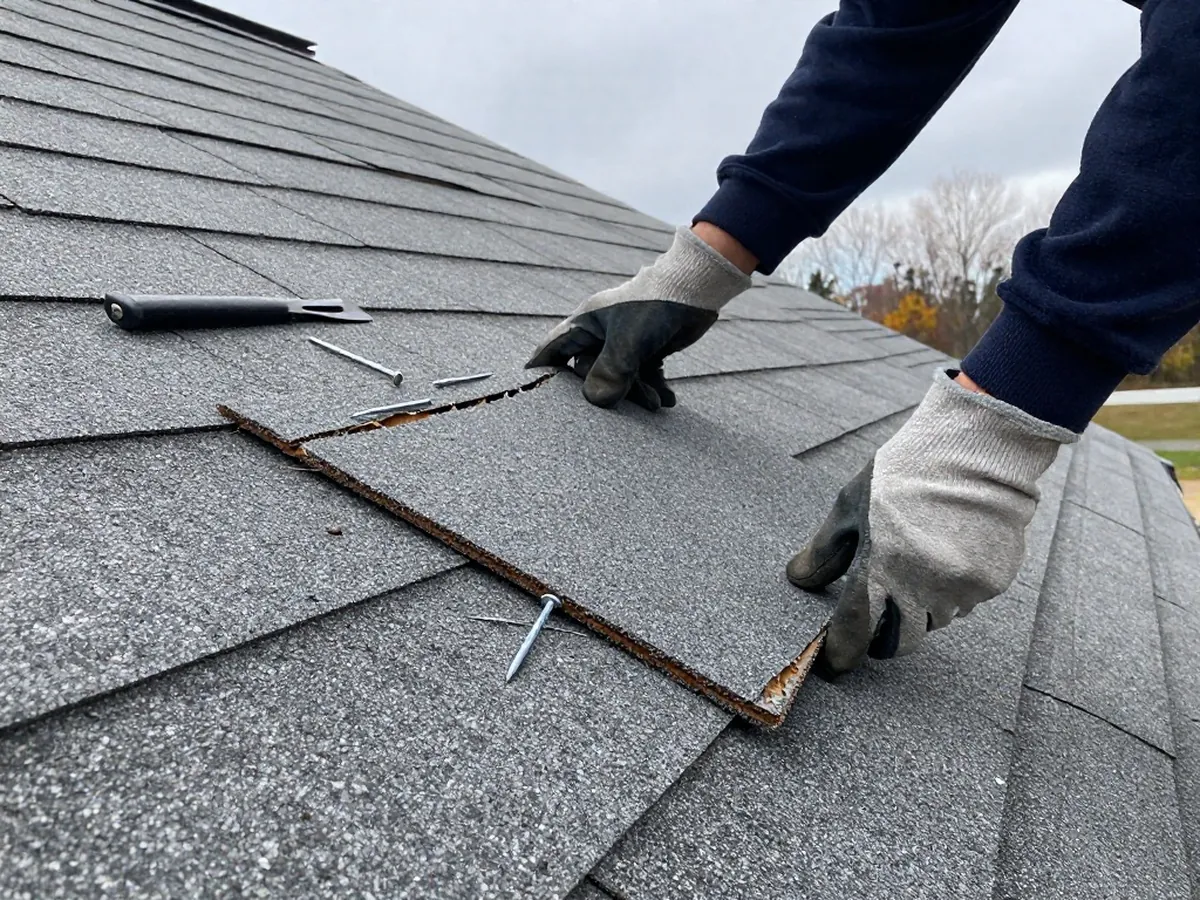
Asphalt shingles
Asphalt shingles go over underlayment on a deck of plywood or boards. In its high-wind fact sheet, FEMA lists the details that decide how a shingle roof holds: underlayment on the deck, roofing nails rather than staples, six nails per shingle along the eaves, tabs sealed down, and flashing where roof meets wall. The asphalt roofing trade group's Sandy-era advice starts the checks for damaged shingles on the ground and in the attic.
Metal roofing
The Building America Solution Center separates standing-seam panels, which hide their fasteners, from exposed-fastener panels, which carry screws through the face. It flags condensation under metal and notes snow guards where snow could slide onto a walkway.
Built-up, modified bitumen and sprayed foam
These are three of the five low-slope systems the National Park Service names in its roofing overview. Built-up roofing and modified bitumen are layered, bitumen-based coverings. Sprayed polyurethane foam is applied as a liquid that sets. The Park Service page is the place to read the history of each.
Single-ply membranes
EPDM, PVC and TPO are single-ply membranes, about 30 to 80 mils thick, according to the Park Service. The asphalt roofing trade group's page on ponding points to clogged drains and to slopes under one-quarter inch per foot as reasons water stays on a low roof.
Reflective roofs
A reflective roof can stay more than 50 degrees cooler than a dark one under summer sun, the Department of Energy says. The trade-off is a winter heating penalty, since the same surface also turns away the winter sun's warmth.
Flashing, whatever the covering
Every covering needs metal at its joints. The Park Service describes step flashing woven into the shingle courses, counterflashing above it and a warning against depending on caulks, sealants or goop. It advises checking flashing yearly. The Department of Energy's chimney page adds that on brick the counterflashing is set into the mortar joints.